
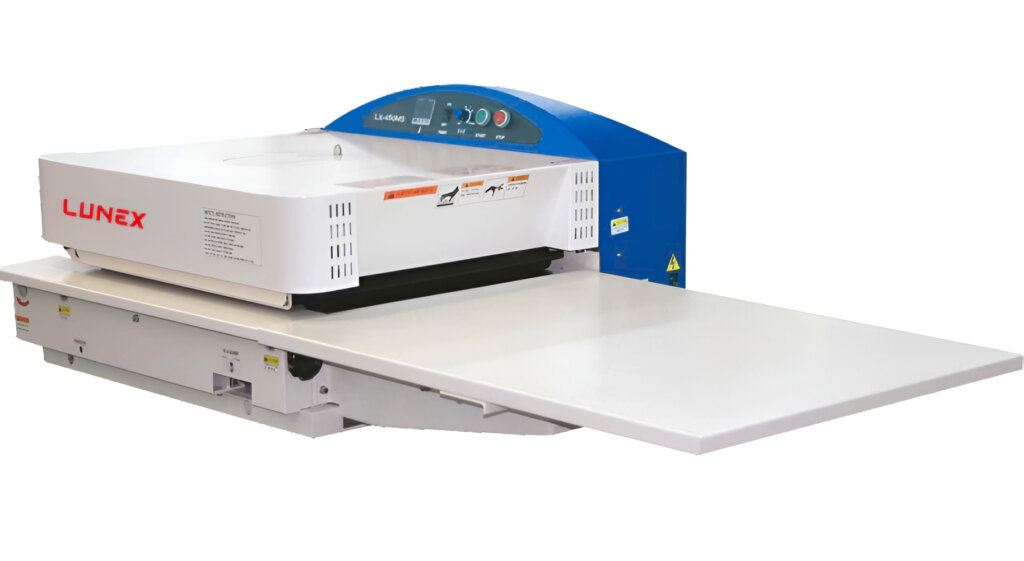
 Garment quality depends on much more than stitching. Proper fusing is also essential for creating garments with the required shape, structure, appearance, and durability. An Advanced Fusing Machine helps manufacturers achieve consistent bonding between fabric and fusible interlining while supporting efficient production.
Fusing is commonly used in collars, cuffs, waistbands, front panels, pockets, and other garment components. When the process is controlled correctly, it can improve the appearance and stability of finished garments.
What Is Fusing in Garment Manufacturing?
Fusing is the process of bonding an interlining or fusible material to fabric using controlled heat, pressure, and time. The process helps provide additional structure to selected garment areas.
An Advanced Fusing Machine is designed to control these essential parameters more consistently than manual or less sophisticated methods. Consistency is especially important when manufacturers are producing garments in large quantities.
Provides Consistent Bonding
One of the most important benefits of an Advanced Fusing Machine is consistent bonding. Uneven heat, pressure, or processing time can lead to weak adhesion, bubbling, lifting, or other appearance problems.
Advanced equipment can help manufacturers maintain controlled operating conditions throughout the fusing process. This supports uniform results across production batches.
Improves Garment Appearance
The quality of fusing can directly influence how a garment looks. Properly fused components can maintain their intended shape and provide a cleaner, more professional appearance.
This is particularly important for structured garments where collars, cuffs, waistbands, and front panels need to retain their shape during production and use.
Supports Better Fabric Stability
Fusing can provide additional stability to fabric sections that require structure. This can make sewing and subsequent garment assembly easier while helping components maintain their intended form.
An Advanced Fusing Machine allows manufacturers to process materials under controlled conditions, helping improve the reliability of the fusing operation.
Increases Production Efficiency
Manual fusing processes may require more labor and can produce variations between batches. Industrial fusing equipment helps standardize the process and can support faster production.
For garment manufacturers handling large orders, improved process consistency can contribute to better workflow management and reduced production delays.
Helps Reduce Rework
Incorrect fusing can result in defects that require additional processing or replacement. Problems such as poor adhesion, uneven bonding, or incorrect positioning can increase production costs.
Using appropriate fusing equipment and maintaining suitable operating parameters can help reduce avoidable defects and improve first-pass production quality.
Choose Equipment According to Your Requirements
Before purchasing an Advanced Fusing Machine, manufacturers should consider fabric types, garment applications, production volume, required working width, temperature requirements, pressure settings, and available production space.
Supplier support is also important. Installation, operator guidance, maintenance, spare parts, and technical assistance can influence the long-term performance of the equipment.
Final Thoughts
An Advanced Fusing Machine can play an important role in improving garment quality and production consistency. By providing controlled heat, pressure, and processing conditions, it helps manufacturers achieve more uniform bonding and better garment structure.
For modern textile and apparel businesses, investing in appropriate fusing technology can support productivity, reduce rework, and improve finished-product quality. Lunex Machine provides machinery solutions designed to support the evolving requirements of garment manufacturers.